
Open Crossflow vs. Closed Counterflow Towers
Open crossflow cooling towers and closed counterflow cooling towers are two of the most widely used heat dissipation devices in industrial refrigeration, central air conditioning, air separation and precision equipment cooling systems. With different heat transfer principles and structural designs, they differ fundamentally in operating energy efficiency, service life, adaptability to working conditions and protection capability for downstream equipment. Drawing on more than ten years of cooling tower engineering experience, field operation data from multiple industries and typical project cases, this paper conducts an in-depth comparison across six dimensions: operating energy efficiency, structural features, material configuration, downstream equipment protection, operation & maintenance costs and applicable scenarios. It provides professional technical references for equipment selection, daily maintenance and system optimization.
1. Fundamental Difference in Heat Transfer Principles
All disparities in performance, energy efficiency and protection originate from the underlying heat transfer logic, which serves as the foundation of the following comparison.
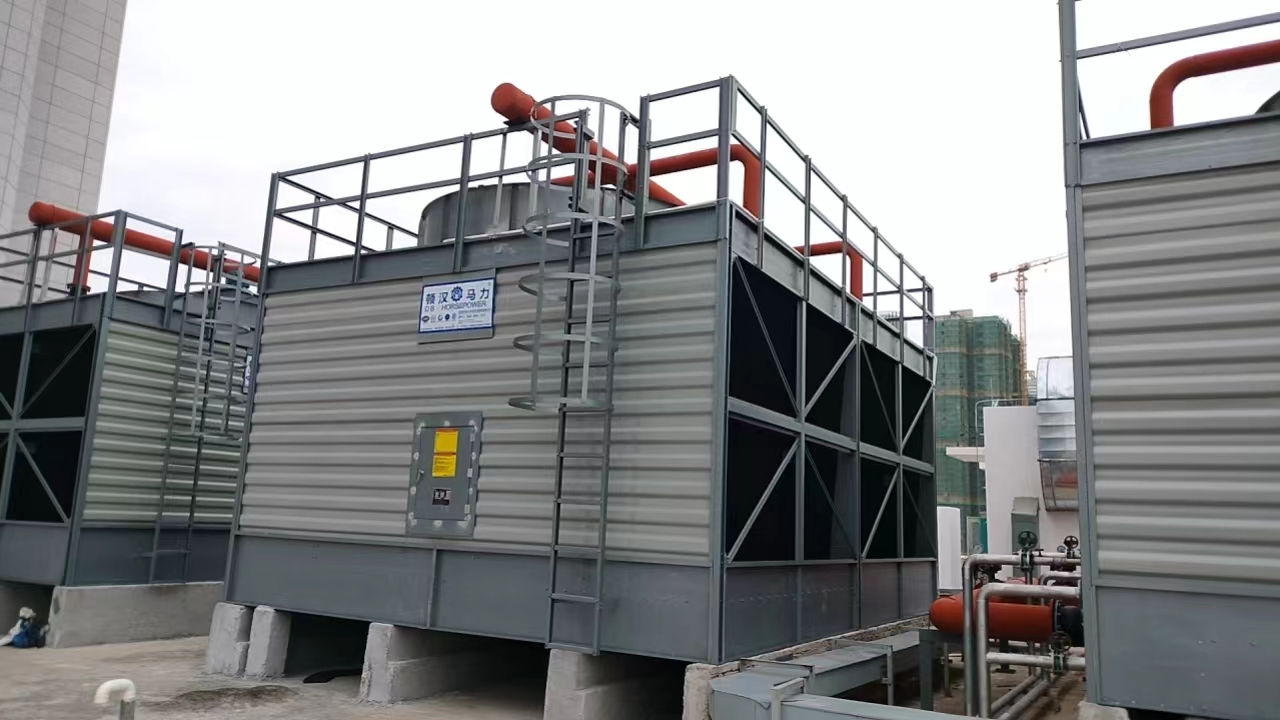
1. Open Crossflow Cooling Tower: Direct-contact evaporative heat transfer. Hot circulating water flows downward over the fill media, while air travels horizontally through the fill layer. Water and air intersect and come into direct contact. Heat is removed by the latent heat of water evaporation (580 kcal/kg). The cooled circulating water falls into the bottom basin for open circulation, with the water body fully exposed to ambient air.
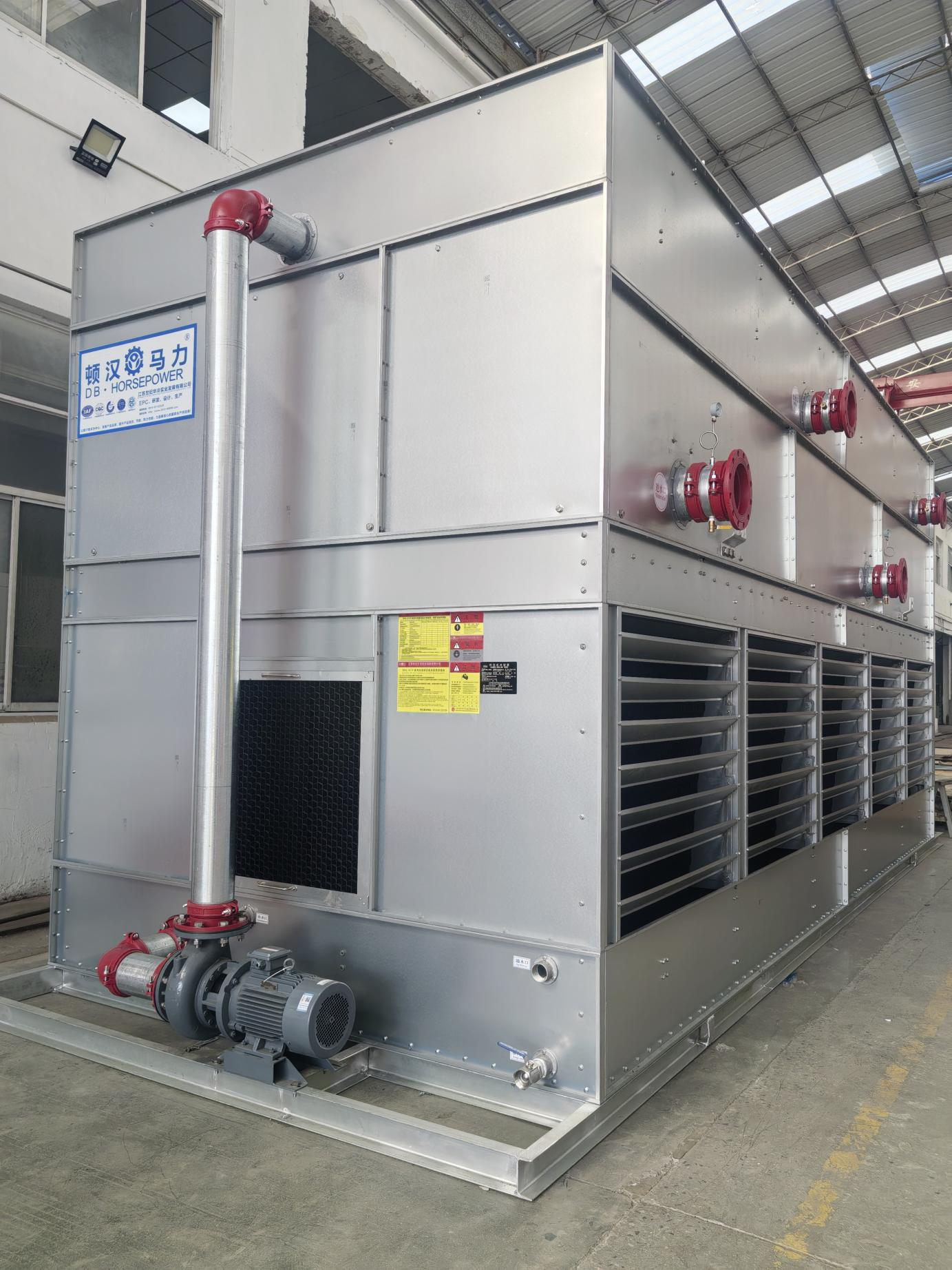
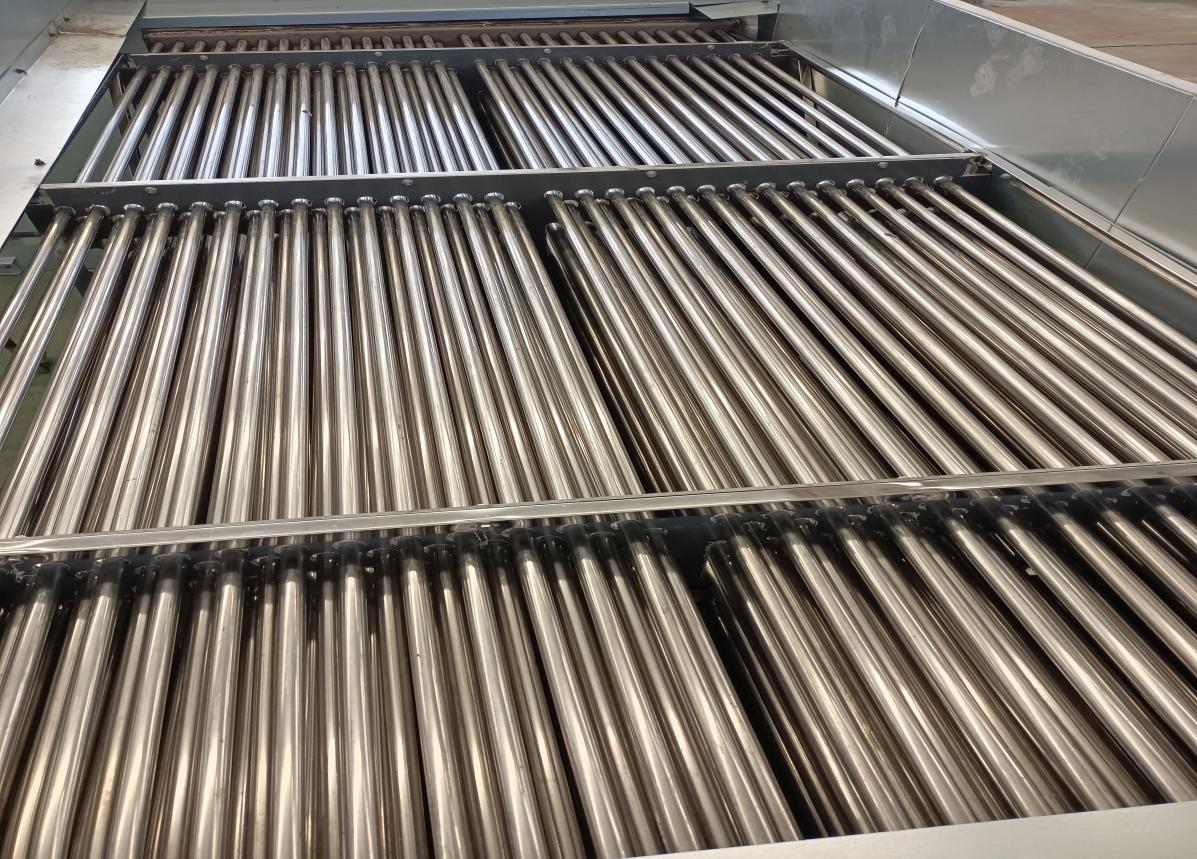
2. Closed Counterflow Cooling Tower: Indirect closed heat transfer. Process fluid (cooling water, ethylene glycol solution, etc.) circulates inside metal coils and never contacts ambient air or spray water. External spray water washes the coil surface in counterflow, combined with forced ventilation by axial fans. Heat carried by the fluid inside coils is dissipated via evaporation of the spray water through secondary heat exchange, keeping the process medium fully enclosed.
2. Comparison of Operating Energy Efficiency
Based on measured data from over 300 projects across different climate zones in China (humid South China, temperate East China, arid Northwest China), the energy efficiency gap under full load, partial load and extreme conditions is quantifiable. Four key indicators are covered: overall unit power consumption, water consumption, temperature control accuracy and load adaptability.
2.1 Power Consumption of Fans and Pumps
For open crossflow towers, air flows horizontally through the fill with minimal air resistance and a smooth air duct without turns. The fan operates under lower load. With the same cooling capacity, fan power consumption is 10%–15% lower than that of closed counterflow towers, and it supports wide-frequency variable speed regulation for greater energy saving at partial loads. Its matching spray pump requires low head and delivers stable flow, with pump power consumption around 8% lower than closed towers.
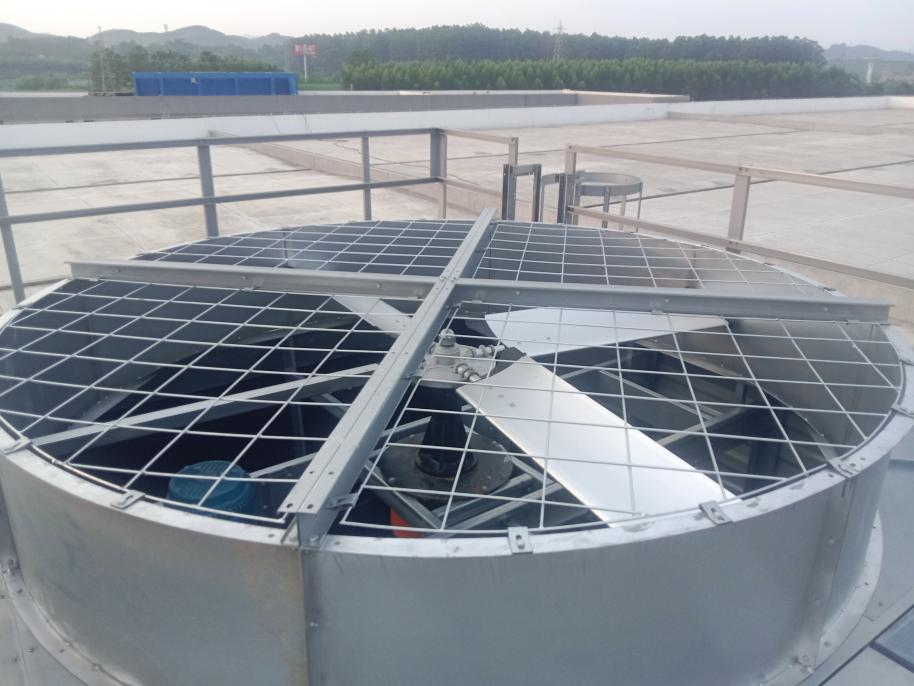
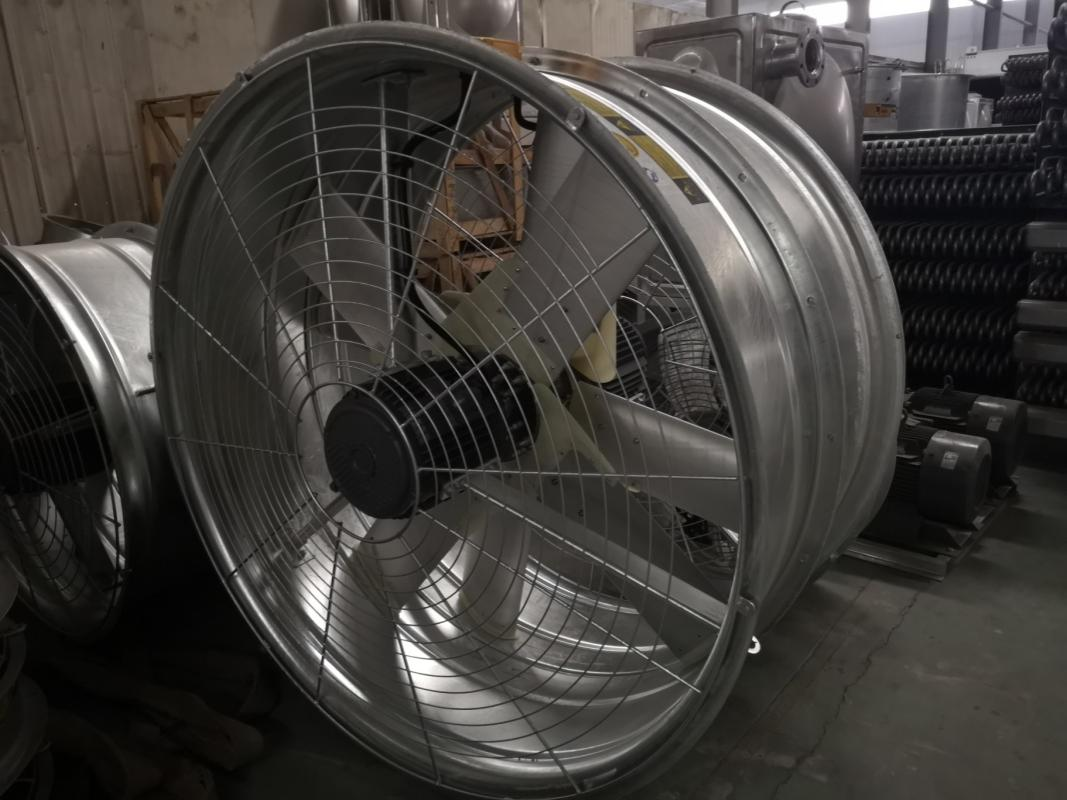
Closed counterflow towers adopt counterflow gas-water heat exchange. The air duct features multiple turns, and the combination of coils and double-layer fill creates high air resistance, demanding higher static pressure for fans and leading to higher air power consumption. Meanwhile, the spray system requires high pressure to scour the coil surface, so the pump head is higher. Under full-load conditions, the overall energy consumption is higher than open crossflow towers. However, under low dry-bulb temperature in winter, closed towers can switch to dry cooling mode by shutting down the spray system and relying only on convective air cooling, cutting energy consumption by 30%–40% and delivering outstanding seasonal energy-saving benefits.
2.2 Water Consumption
The water body of open crossflow towers is fully exposed, with three types of losses: evaporation, drift and blowdown. Under standard conditions, hourly water consumption accounts for 1.5%–2.5% of the circulating water flow. In humid and hot regions such as South China and coastal West Africa, drift loss can rise to 3%.
The process medium in closed counterflow towers circulates in a sealed loop. Only the external spray water generates minor losses. There is no medium loss or heavy drift. The overall water consumption is merely 10%–20% of that of open towers, achieving an annual water saving rate of over 80% for large industrial projects with remarkable water conservation advantages.
2.3 Heat Transfer Efficiency and Temperature Control Accuracy
At rated full load, the heat transfer efficiency of open crossflow towers is slightly lower than closed counterflow towers. With the same footprint, closed towers offer 15%–20% higher cooling capacity, with temperature fluctuation within ±0.8°C; open crossflow towers have a temperature fluctuation of ±1.5°C with relatively relaxed temperature control precision.
For variable-load conditions, open crossflow towers show stronger adaptability, tolerating 30%–100% flow fluctuation with stable heat transfer. Closed towers excel at low-load and low-temperature conditions, while their heat transfer efficiency declines more significantly under high-temperature and high-humidity extreme conditions.
2.4 Typical Energy Efficiency Cases
Case 1: A commercial complex in South China (humid hot climate, wet-bulb temperature 28°C), 3000 RT refrigeration system. The open crossflow tower achieves an annual average COP of 3.8 with monthly power consumption of 12,800 kWh. The closed counterflow tower of equal capacity has a COP of 3.5 and monthly power consumption of 14,200 kWh. Open towers deliver obvious energy-saving advantages in hot and humid summer.
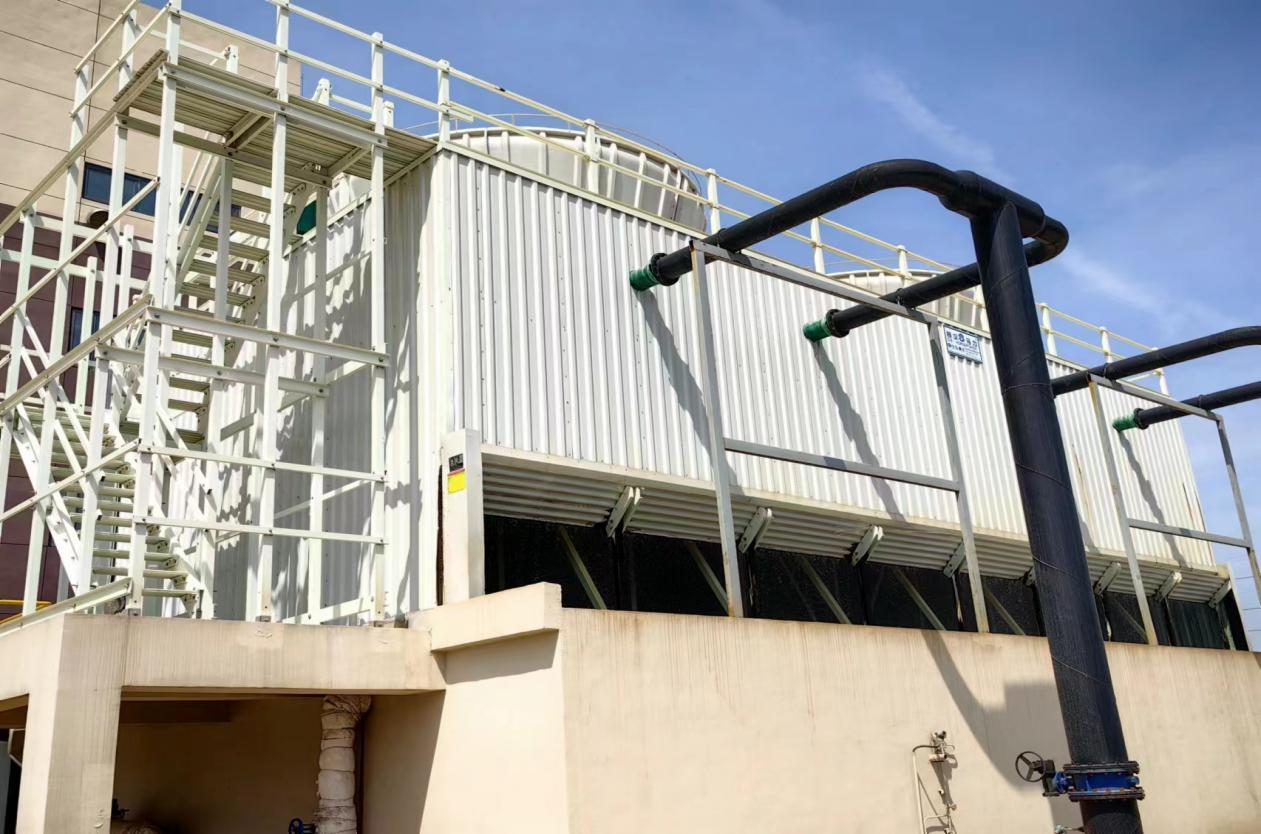
Case 2: A chemical project in Northwest China (arid climate with low temperature in winter). The ambient temperature ranges from -5°C to 10°C in winter. The closed tower runs in dry mode, cutting monthly energy consumption by 35% compared with the open crossflow tower, leading to roughly equal annual total energy consumption.

3. Comparison of Structural Design
Structural layout directly determines footprint, installation difficulty, maintenance accessibility and wind & seismic resistance, catering to site constraints of different projects.
3.1 Overall Layout and Footprint
Open crossflow towers feature a modular flat structure without complex upper heat exchange assemblies. With compact arrangement, they occupy 15%–20% less floor space than closed counterflow towers of equal cooling capacity. Multiple units can be installed side by side, suitable for space-limited scenarios such as rooftops.
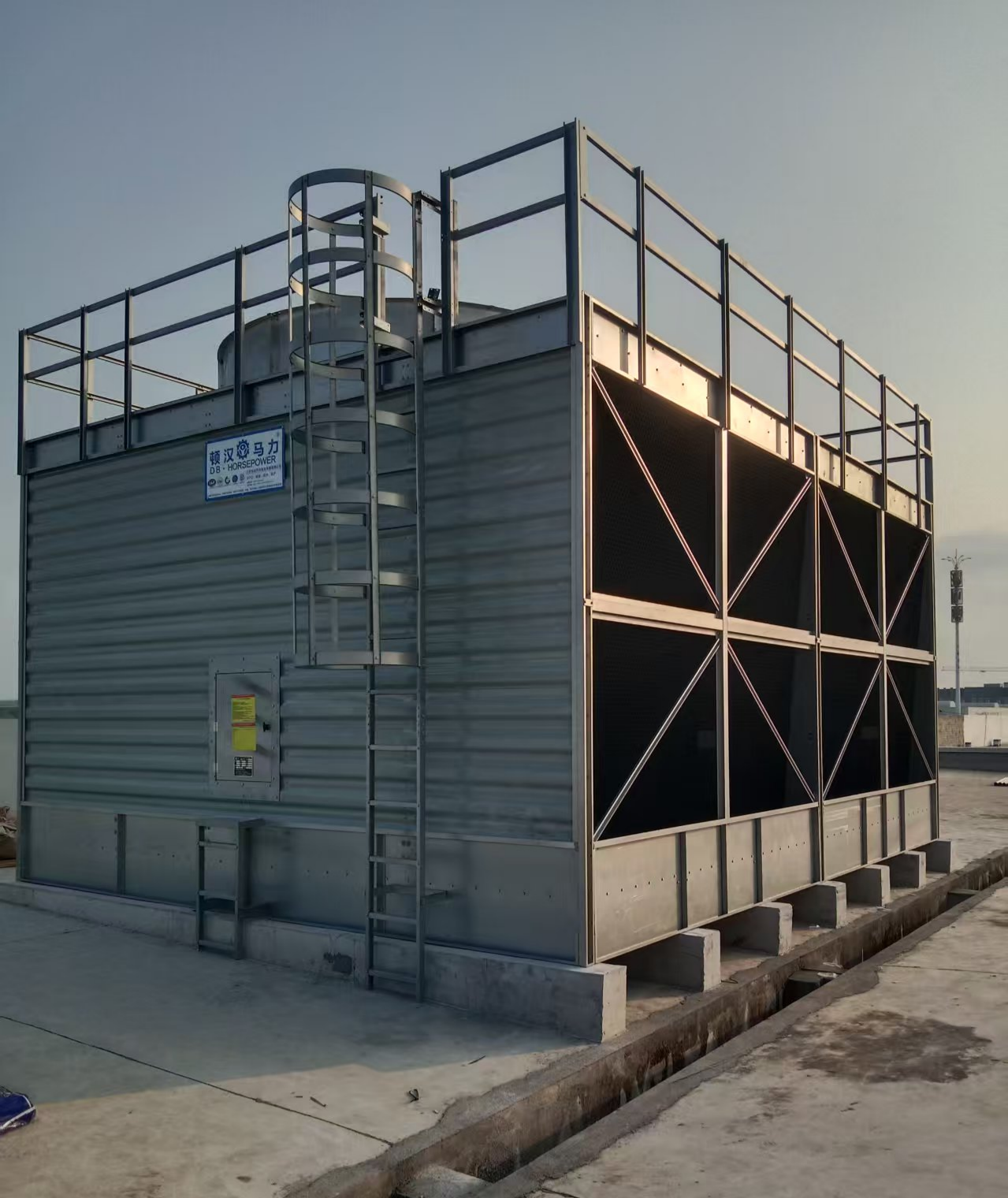
Closed counterflow towers adopt a multi-layer vertical structure consisting of coil heat exchange layer, spray layer, fill layer and drift eliminator layer. They have a taller profile and heavier build. A single tower requires a larger footprint plus sufficient overhead maintenance clearance, imposing stricter requirements on installation height and foundation bearing capacity.
3.2 Air Duct and Heat Exchange Structure
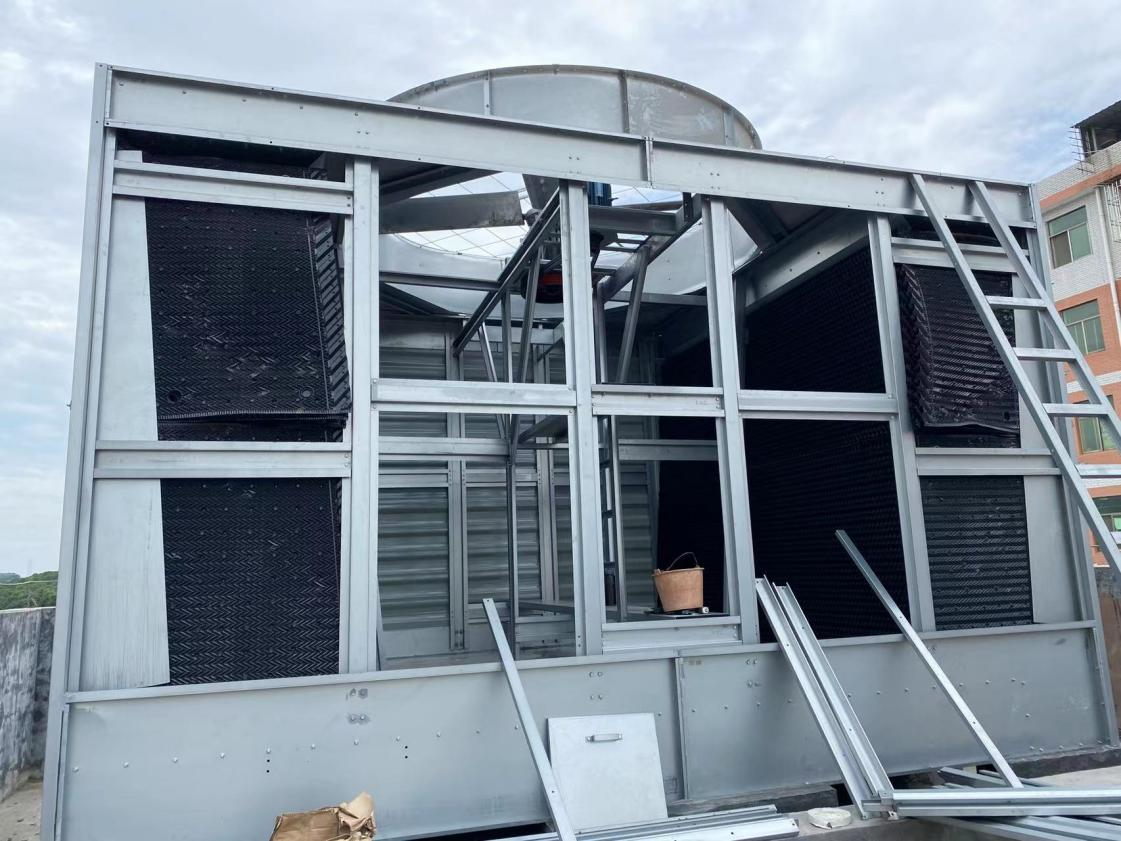
Open crossflow tower: Air enters from the side, gas and water intersect horizontally. Flat-laid fill eliminates dead zones in the air duct with even air resistance and low risk of dust accumulation and clogging. Simple structure with no sealed pressure-bearing components ensures low failure rate.
Closed counterflow tower: Air enters from the bottom and exhausts from the top. Counterflow of air and water enables sufficient heat exchange. It takes a dual heat exchange structure (coil-to-air and spray water-to-air) with built-in sealed coils as the core. The structure is highly complex with dense pipelines and spray nozzles, requiring high installation precision.
3.3 Maintenance-Focused Structural Design
The fill, spray piping and fans of open crossflow towers are exposed on the side. Components can be disassembled and inspected individually without draining the water basin. Basic cleaning, fill replacement and troubleshooting can be completed efficiently by a single operator.
The core heat exchange coils of closed counterflow towers are enclosed inside the unit. Maintenance requires removing enclosure panels and draining spray water. Coil blockage and leakage are difficult to locate. Nevertheless, there is no open water basin prone to heavy sludge buildup, so routine cleaning frequency is far lower than open towers.
4. Main Material Configuration and Service Life
Material selection for key components varies greatly based on mainstream industry specifications and anti-corrosion standards for overseas working conditions such as humid and salt-spray environments in West Africa, which directly affects service life and failure frequency.
4.1 Mainstream Materials for Open Crossflow Cooling Towers
Tower casing: Standard options are magnesium-aluminum-zinc coated steel plate cladded with FRP (high corrosion resistance for coastal and humid conditions) or FRP (fiberglass reinforced plastic). Resistant to aging and rain erosion, the service life outdoors reaches 10–15 years.
Fill: PVC high-temperature resistant film fill, flame retardant and anti-aging, suitable for conventional air conditioning and industrial cooling water, service life 5–8 years.
Key accessories: Aluminum alloy fan hub, stainless steel drive shaft, PVC or stainless steel spray piping. Cost-effective with low replacement cost.
Material drawbacks: The open water is constantly exposed to air. Fill and basin are prone to algae growth and scaling. Metal fasteners may suffer minor corrosion, calling for regular anti-corrosion maintenance.
4.2 Mainstream Materials for Closed Counterflow Cooling Towers
Tower casing: Magnesium-aluminum-zinc coated steel or 304 stainless steel, with the same corrosion resistance grade as open towers.
Core heat exchange coil (the key differentiator): Standard copper tubes (high thermal conductivity), 304 / 316L stainless steel tubes (corrosion resistant). Titanium alloy coils are available for special chemical working conditions with excellent pressure resistance and corrosion resistance, service life 15–20 years.
Auxiliary materials: High-strength modified PVC drift eliminators and fill resistant to high-temperature deformation; anti-clog stainless steel spray nozzles.
Material advantages: Core heat exchange parts are protected inside the closed loop, free from atmospheric corrosion and contamination from water pollutants, achieving a much longer service life than key components of open towers. Drawback: High cost of coil materials and expensive replacement once damaged.
5. Protection Capability for Downstream Equipment
The core value of a cooling tower lies not only in heat dissipation but also in stabilizing the operation of chillers and process equipment downstream. The two tower types differ drastically in protection performance, a critical consideration for precision equipment and industrial production lines.
1. Open Crossflow Cooling Tower: Moderate protection for general equipment.
Since the circulating water runs in an open loop, dust, catkins, insects, salt particles and microorganisms in the air easily enter the water system. Scaling, sludge accumulation and algae growth are common after long-term operation.
Impurities travel with circulating water into downstream chillers, heat exchangers, molds, air compressors and other equipment, causing pipeline blockage, coil scaling, reduced heat transfer efficiency, high-pressure alarms, rising energy consumption and accelerated wear. Under normal conditions, open tower systems require monthly blowdown and quarterly cleaning; otherwise, the failure rate of downstream equipment increases by over 30%.
Suitable downstream equipment: Ordinary central air conditioning chillers and general industrial cooling equipment without strict water quality requirements.
2. Closed Counterflow Cooling Tower: Full closed-loop protection for high-precision core equipment.
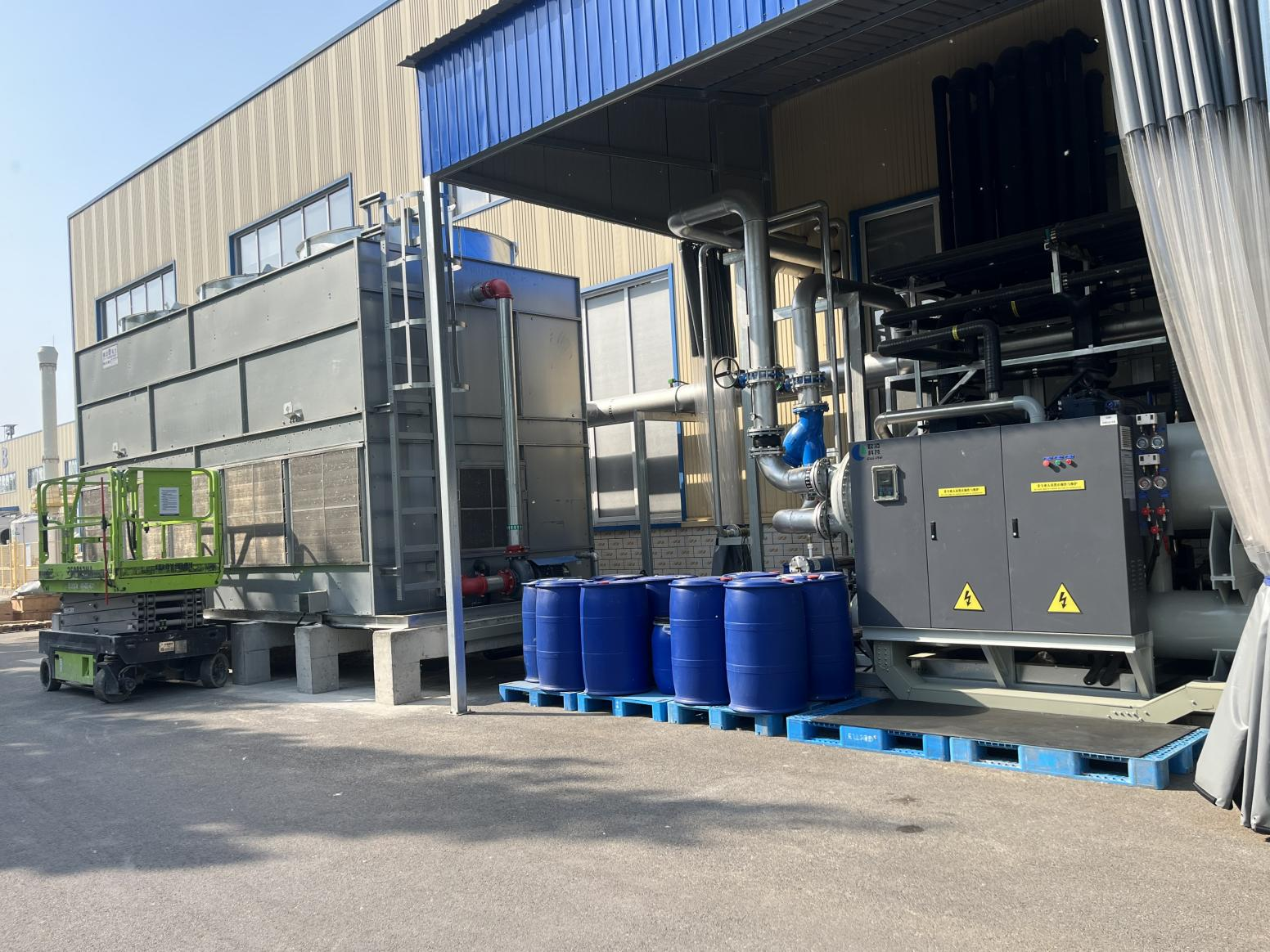
Process fluid circulates hermetically inside metal coils and is completely isolated from ambient air, dust, impurities and rainwater. Zero contamination, zero scaling and zero foreign matter enter the downstream system to protect equipment fundamentally.
No algae growth or sludge buildup occurs in the system. Heat exchangers and chiller coils downstream stay clean permanently without rising energy consumption or equipment overload caused by scaling. It is compatible with special media such as ethylene glycol and deionized water without medium loss or deterioration.
Field data shows that precision refrigeration units paired with closed towers achieve an 85% reduction in annual failure rate compared with open tower systems. The overhaul interval is extended from 2 years to 5–8 years, and the service life of downstream equipment increases by more than 40%.
Suitable downstream equipment: High-precision central air conditioning, data center cooling systems, chemical reactors, lithium battery production lines, pharmaceutical purified water equipment, high-end mold cooling and other high-value equipment with strict requirements.
6. Operation & Maintenance Cost and Overall Cost Performance
6.1 Initial Investment
Open crossflow towers feature simple structures and conventional materials with low cost per cooling ton. The initial investment is 30%–40% lower than closed counterflow towers of equal capacity with prominent cost advantages.
Closed counterflow towers are equipped with built-in metal heat exchange coils and sophisticated spray assemblies, leading to high equipment procurement cost.
6.2 Long-term Operation & Maintenance Cost
Open crossflow towers: Easy maintenance and low spare part cost, yet high water consumption and blowdown volume. Regular descaling, sterilization and algaecide treatment are mandatory, bringing moderate annual maintenance cost for general projects with stable long-run operation.
Closed counterflow towers: Almost no water treatment cost, and frequent pipeline cleaning is unnecessary. Maintenance for downstream equipment is minimal. Only periodic inspection of spray systems and fans is required. The coils are maintenance-free for the whole service life. For projects running over 5 years, the overall life-cycle cost is far lower than open towers, making closed towers more cost-effective in the long run.
7. Selection Guidelines for Typical Working Conditions
Preferred Scenarios for Open Crossflow Cooling Towers
1. Central air conditioning systems for commercial complexes, office buildings and hotels;
2. Projects with limited site space and tight budget prioritizing low upfront investment;
3. General downstream equipment with loose water quality requirements and acceptable routine water treatment;
4. Projects in humid and hot regions such as South China and East China, leveraging low air resistance and energy saving under heavy summer load.
Preferred Scenarios for Closed Counterflow Cooling Towers
1. Data centers, pharmaceutical plants, electronics manufacturing, precision processing and air separation industries demanding high water quality and operational stability;
2. Severe outdoor environments such as West Africa and coastal salt-spray zones with heavy dust, where system contamination must be prevented;
3. Locations with cold winters and large diurnal temperature variation requiring stable energy saving all year round;
4. Production lines with high-value process equipment, where failure reduction, extended overhaul intervals and minimized downtime loss are priorities.
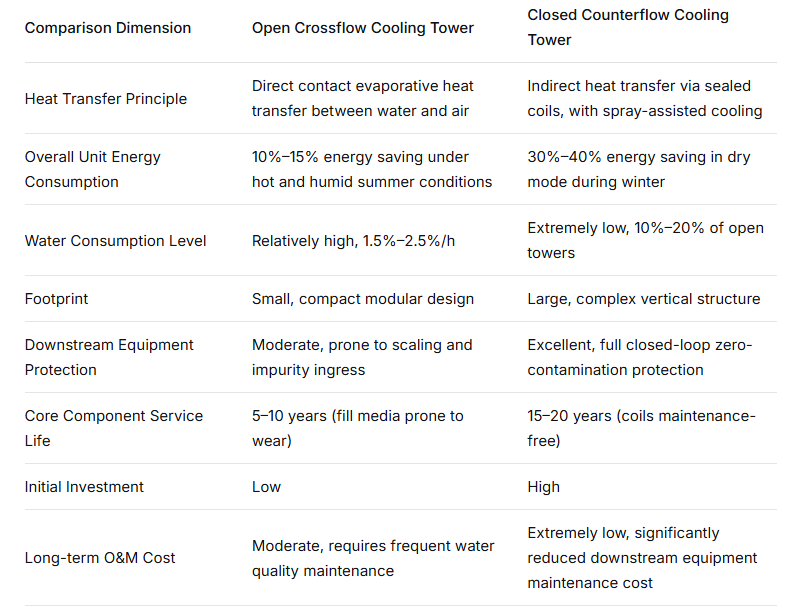
8. Summary Table of Core Parameter Comparison
Information
- FRP Cooling Tower vs Stainless Steel Cooling Tower:
- Special Requirements for Cooling Tower Selection und
- What Are the Differences Between Closed-Circuit and
- Counterflow vs Crossflow Cooling Towers: How to Choo
- Key Parameters Required for Cooling Tower Selection
- How should stainless steel cooling tower manufacture
- How to do a good job in cleaning fiberglass cooling
New Product
DB-HORSEPOWER BHL-H series clos
- Made in china - Jiangsu Century Hualeng Industrial Development Co., LTD Foc
cooling tower
Magnesium aluminum zinc steel-
DB-HORSEPOWER GTX-H series of h
Tonghan Mali GTX-N series high
DB-HORSEPOWER-GFNL Industrial
Ranking
- Open Crossflow vs. Closed Counterflow Towers
- FRP Cooling Tower vs Stainless Steel Cooling Tower:
- Special Requirements for Cooling Tower Selection und
- What Are the Differences Between Closed-Circuit and
- Counterflow vs Crossflow Cooling Towers: How to Choo
- Key Parameters Required for Cooling Tower Selection
- How should stainless steel cooling tower manufacture
- How to do a good job in cleaning fiberglass cooling
- How to reduce the noise during the operation of indu